
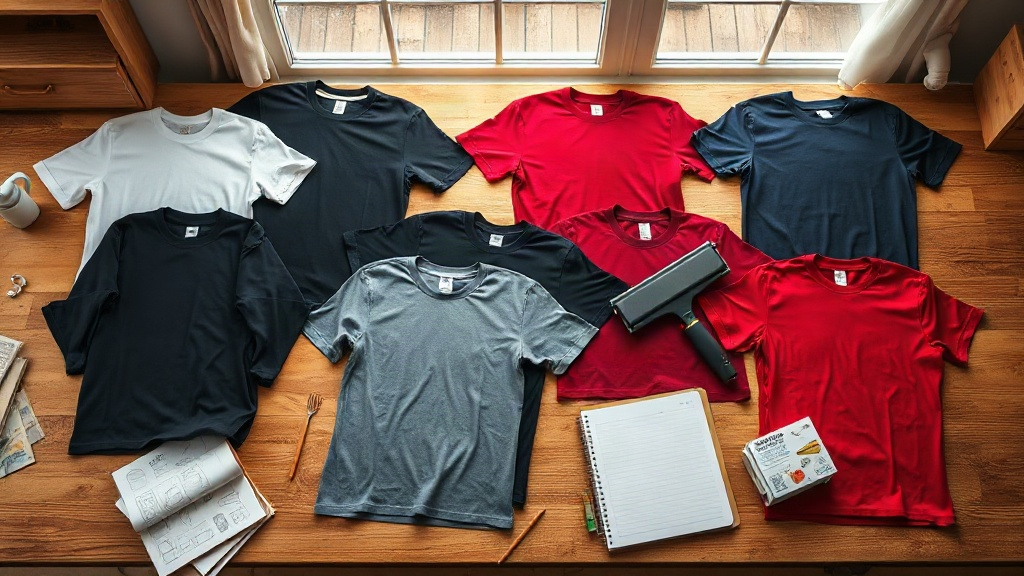
Creating custom shirts is more than a hobby; it's a way to express identity, build a brand, or celebrate a moment. Whether you're making a team uniform, a family reunion tee, or a product line for your small business, the process can feel overwhelming if you don't know where to start. This guide walks you through every step, from choosing the right blank to selecting a printing method, so you can produce shirts you're proud to wear or sell.
Why Custom Shirts Matter
In a world of mass-produced apparel, a custom shirt signals intention. It tells people you cared enough to make something unique. For businesses, custom shirts are walking billboards that build recognition. For events, they create a shared identity. For individuals, they're a canvas for creativity. The key is to approach the project with the same care you'd give any design task. That means understanding your audience, your purpose, and the technical options available.
Choosing the Right Blank T-Shirt
The foundation of any great custom shirt is the blank itself. A poor-quality blank can ruin even the best design. You need to consider fabric, fit, and color. Cotton is the most popular choice for its softness and breathability, but blends like cotton-polyester offer durability and reduced shrinkage. Tri-blends provide a vintage look and exceptional comfort. Fit matters too: unisex, women's cut, youth, and oversized styles all serve different purposes. Color selection should align with your design and your brand. If you're selling shirts, consider offering a few core colors that appeal to a wide audience. For personal projects, don't be afraid to experiment with bold hues.
When sourcing blanks, look for reputable suppliers who provide consistent sizing and quality. Many printers recommend specific brands because they know how the fabric reacts to different inks. If you're printing yourself, test a sample before committing to a large order. A good blank will hold its shape, resist pilling, and feel comfortable against the skin.
Designing Your Custom Shirts
Design is where your shirt comes to life. You don't need to be a professional graphic designer, but you do need to think about how your artwork will translate onto fabric. Start with a clear concept. What message or image do you want to convey? Keep it simple; overly complex designs can get lost or become muddy when printed. Use high-resolution graphics (at least 300 DPI) and vector files when possible. Pay attention to color contrast, especially if printing on dark shirts. Light inks on dark backgrounds require a white underbase, which can affect the final look.
Placement and Sizing
Where you place your design matters as much as the design itself. The standard front print is about 10 to 12 inches wide, centered on the chest. Left chest prints are smaller, typically 3 to 4 inches wide, and give a more subtle, professional look. Back prints can be larger, up to 12 by 14 inches. Sleeve prints add a nice detail. Always create a mockup to visualize the final product. Consider how the design will look when the shirt is worn; curves and folds can distort the image.
Common Design Mistakes to Avoid
- Using low-resolution images that pixelate when printed.
- Forgetting to account for the print area on different shirt sizes.
- Choosing colors that don't contrast well with the shirt fabric.
- Overcomplicating the design with too many elements.
- Ignoring the feel of the print; thick ink layers can be uncomfortable.
Printing Methods for Custom Shirts
There are several ways to print custom shirts, each with its own strengths and weaknesses. Your choice depends on the quantity, budget, and desired look.
Screen Printing
Screen printing is the industry standard for bulk orders. It involves creating a stencil (screen) for each color and pushing ink through it onto the fabric. It's cost-effective for large runs, offers vibrant colors, and produces a durable print that lasts wash after wash. However, setup costs are high, so it's not ideal for small quantities. If you're ordering 50 shirts or more, screen printing is often the best choice.
Direct-to-Garment (DTG) Printing
DTG printing works like an inkjet printer for fabric. It's perfect for small batches and complex, full-color designs because there are no setup fees. The print is soft and breathable, but it may fade faster than screen printing, especially on dark shirts. DTG is great for on-demand production and personal projects.
Heat Transfer and Vinyl
Heat transfer involves printing your design onto a special paper and then pressing it onto the shirt with a heat press. It's accessible for home crafters and allows for full-color designs. Vinyl cutting is another option, where you cut colored vinyl and press it onto the shirt. Vinyl is durable and great for simple text or logos, but it can feel stiff on large areas.
Embroidery
Embroidery adds a premium, textured look. It's ideal for logos and left-chest designs. While it's more expensive and limited in detail, it's highly durable and professional. Many businesses choose embroidery for polos and hats, but it can also work on t-shirts.
Sourcing Blanks and Materials
If you're printing yourself, you'll need to source blanks, inks, and equipment. Online retailers like Smart Blanks Store offer a wide range of t-shirts from trusted brands. Look for bulk discounts and check reviews for consistency. For screen printing, you'll need screens, squeegees, and plastisol or water-based inks. Water-based inks are softer and more eco-friendly but require more care. For DTG, you'll need a specialized printer, which is a significant investment. Many people start by outsourcing printing to a local shop while sourcing their own blanks to save on costs.
Step-by-Step: Creating Your First Custom Shirt
- Define your purpose and audience.
- Choose a blank shirt that fits your needs.
- Create or commission your design.
- Select a printing method based on quantity and budget.
- Order a sample to test quality.
- Produce your order and inspect each shirt.
- Care for your shirts properly to extend their life.
Caring for Your Custom Shirts
To keep your custom shirts looking new, wash them inside out in cold water and tumble dry on low. Avoid ironing directly on the print; if needed, iron inside out. For vinyl and heat transfer, wait 24 hours before the first wash. Proper care can significantly extend the life of your prints.
Frequently Asked Questions
How much does it cost to make custom shirts?
Costs vary widely. A basic blank shirt might cost $3 to $10, while printing can add $5 to $15 per shirt depending on the method and quantity. Screen printing is cheaper per unit for large orders, while DTG is more affordable for small batches.
What is the best printing method for a small batch of custom shirts?
For small batches (under 20 shirts), DTG or heat transfer is usually the most economical. They have no setup fees, so you can print one or a few without breaking the bank.
Can I print custom shirts at home?
Yes, you can use heat transfer paper with a regular iron or a heat press, or use vinyl cutting. For professional results, a heat press is recommended. Screen printing at home is possible but requires more equipment and space.
How do I choose the right size for my custom shirt design?
Measure the print area you want. For a standard front print, aim for 10-12 inches wide. For left chest, 3-4 inches. Always create a mockup and consider the shirt size; a design that looks good on a small shirt might be too small on a large one.
Where can I buy blank shirts for printing?
You can find blanks at craft stores, online retailers, or specialized wholesalers like Smart Blanks Store. Look for brands known for quality and consistency, and consider ordering samples before buying in bulk.