
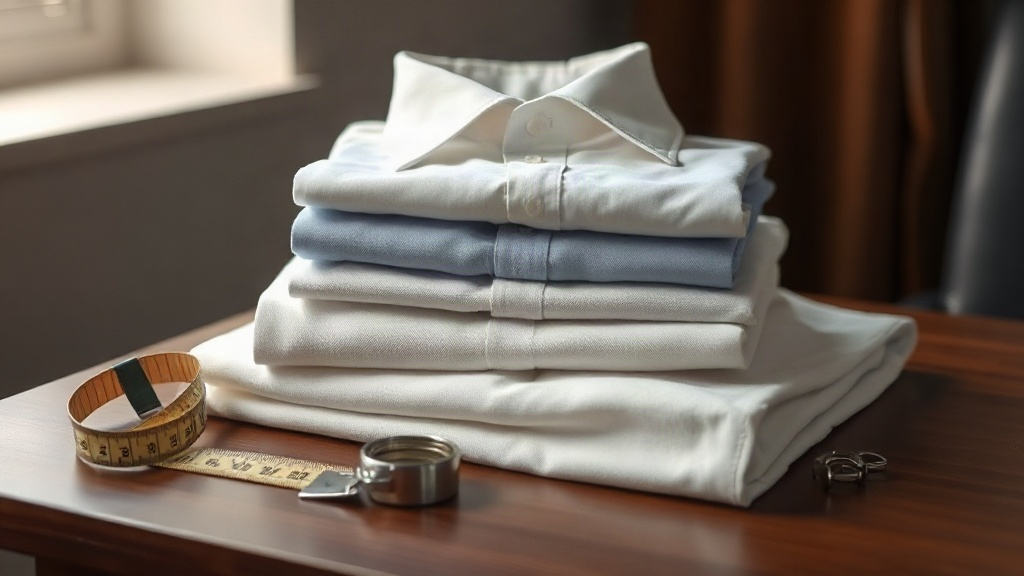
Walk into any menswear department and you will see rows of shirts that look almost identical. The difference between a shirt you tolerate and one you reach for every week comes down to three things: fabric, fit, and finish. When you invest in a custom premium shirt, you control all three. This guide breaks down each element so you can specify a garment that fits your body, your climate, and your routine without paying for features you do not need.
What Makes a Shirt Truly Premium
Premium is not a label sewn into the collar. It is a set of measurable qualities that affect how the shirt feels on day one and how it holds up after fifty washes. Before you choose colors or buttons, understand the construction details that separate a lasting shirt from a disposable one.
Fabric Weight and Weave
Shirt fabric is measured in grams per square meter, or GSM. A lightweight poplin around 100 to 120 GSM works well for hot offices and summer events. Mid-weight twill in the 130 to 150 GSM range drapes more cleanly and resists wrinkles better. Heavier oxford cloth above 160 GSM feels substantial and softens beautifully over time, which is why it remains a staple for casual and business-casual wear.
The weave also changes how light interacts with the cloth. Poplin has a smooth, slightly lustrous surface that reads formal. Oxford has a basket-weave texture that reads relaxed. Herringbone and dobby add visual interest without shouting. Choose the weave to match the setting, then choose the weight to match the season.
Thread Count and Fiber Quality
Thread count gets marketed heavily, but two-ply yarns matter more than a high single number. Two-ply means two strands are twisted together before weaving, which creates a stronger, smoother yarn that resists pilling. Long-staple cotton such as Supima or Egyptian cotton produces fewer stray fibers, so the surface stays clean and the collar keeps its shape.
If you want easy care, a cotton-poly blend can reduce ironing, but it will never match the breathability of pure cotton. For a shirt you plan to wear against your skin for ten hours, pure long-staple cotton is usually the better investment.
Getting the Fit Right
A premium fabric cannot rescue a shirt that pulls across the chest or balloons at the waist. Fit is where customization earns its keep, because standard sizes assume an average body that few people actually have.
Measurements That Actually Matter
Start with four numbers: neck, chest, waist, and sleeve length. Measure your neck at the base, where a collar sits, and add half an inch for comfort. Measure your chest at the fullest point, keeping the tape level. Measure your waist at the point where you want the shirt hem to sit, not at your trouser line. For sleeves, measure from the center back of your neck, over the shoulder, to the wrist bone.
Then decide on your preferred silhouette. A classic fit leaves room through the torso and is comfortable for desk work. A slim fit tapers through the waist and looks sharper under a jacket. A tailored fit sits between the two and suits most body types. If you are between sizes, size up on the neck and have the body taken in, since collar alterations are difficult.
Collar and Cuff Choices
The collar frames your face, so it deserves attention. A spread collar balances a round or square face and works with most tie knots. A point collar elongates the face and suits narrow features. A button-down collar is casual and holds its shape without a tie. Cuffs follow a similar logic: barrel cuffs are versatile and easy to button, while French cuffs add formality and require cufflinks.
Consider your daily routine when choosing. If you remove your jacket at your desk, a button-down collar will look intentional. If you wear a tie daily, a spread collar with removable collar stays gives you a crisp, structured look.
Finishing Details That Separate Good from Great
Two shirts can share the same fabric and measurements yet feel completely different because of how they are assembled. These details are worth specifying when you order a custom premium shirt.
- Single-needle stitching at the side seams creates a cleaner, stronger seam than a basic overlock.
- Mother-of-pearl buttons resist cracking and develop a subtle patina with age.
- A split yoke allows the fabric to move with your shoulders and adds a tailored look.
- Reinforced gussets at the hem prevent tearing when you tuck and untuck repeatedly.
- Removable collar stays keep the points sharp and can be replaced if lost.
These features add modest cost but extend the life of the shirt significantly. A well-finished shirt can last five to seven years with proper care, while a poorly finished one may lose its shape in a single season.
Buttons, Stitching, and Interlining
Check the buttonhole stitching: dense, even stitches hold up better than sparse ones. Interlining, the material inside the collar and cuffs, determines how the shirt holds its shape. Fused interlining is cheaper but can bubble after repeated washing. Sewn interlining costs more but keeps the collar smooth for the life of the shirt.
If you wear your shirt untucked, ask for a shorter hem with a slight curve. If you tuck it in, a longer hem with side vents prevents it from pulling out when you reach or sit.
How to Care for a Custom Premium Shirt
Care determines whether your investment lasts two years or ten. Wash in cold water on a gentle cycle, and turn the shirt inside out to protect the surface fibers. Avoid chlorine bleach, which weakens cotton fibers. Use a light starch only on the collar and cuffs if you want structure without stiffness.
Hang the shirt to dry on a shaped hanger rather than a wire one, which can stretch the shoulders. Iron while slightly damp, starting with the collar, then the cuffs, then the body. Store it with space between garments so air can circulate. Rotating three or four shirts through the week gives each one time to recover and reduces wear.
Frequently Asked Questions
How much should I expect to pay for a custom premium shirt?
Prices vary widely based on fabric and construction. A basic custom shirt with mid-weight cotton and standard finishing might start around the cost of two mid-range retail shirts. Upgrading to long-staple cotton, mother-of-pearl buttons, and sewn interlining adds cost, but the shirt will likely outlast several cheaper alternatives.
How long does it take to receive a custom shirt?
Timelines depend on the maker and current demand. Some workshops complete orders in two to three weeks, while others take four to six weeks, especially during peak seasons. Always confirm the production and shipping window before you order for a specific event.
Can I order a custom premium shirt if I have never been measured professionally?
Yes. Many makers provide a measuring guide and offer virtual fit consultations. Have a friend help you take measurements, and compare them against the size chart twice. If you are unsure, order one shirt first, evaluate the fit, and adjust your measurements before ordering more.
What is the best fabric for a custom shirt I will wear year-round?
A mid-weight two-ply cotton in a plain weave or twill works well in most climates. It breathes in summer, layers under a sweater in winter, and holds up to frequent washing. If you live in a very hot climate, consider a lighter poplin; if you face cold winters, a heavier oxford or flannel provides more warmth.
How do I know if a shirt's collar is well constructed?
Feel the collar between your fingers. It should be firm but not stiff, with no sharp ridges or soft spots. Look for even stitching along the collar band and points. If the collar uses removable stays, the pockets should hold them snugly. A well-made collar returns to shape after you bend it gently.