
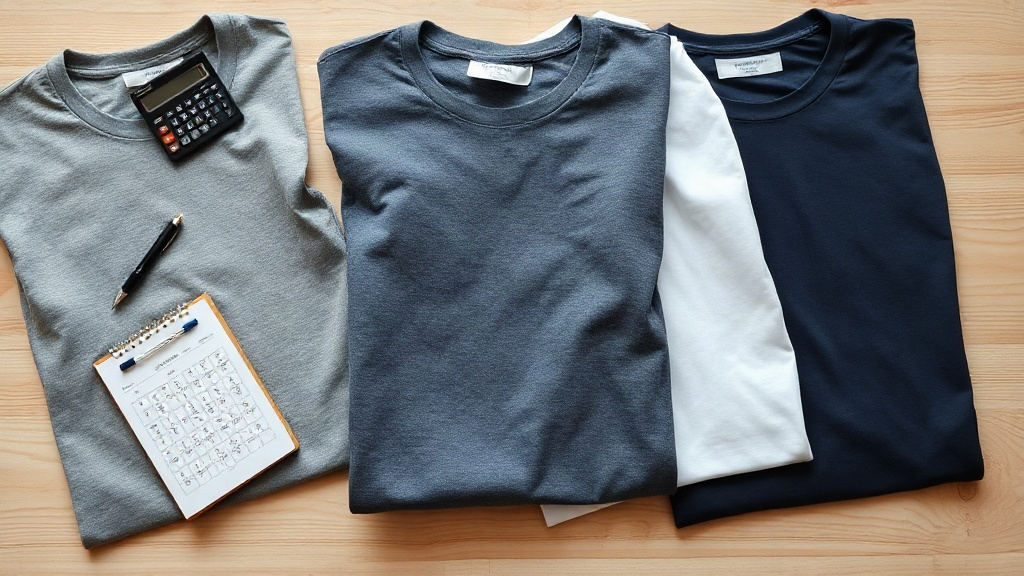
When you decide to create custom premium t-shirts, one of the first metrics you'll encounter is CPS. But what exactly does it mean, and why should it matter to you? Whether you're a small business owner launching branded merchandise, a designer building a clothing line, or an event organizer wanting high-quality apparel, understanding CPS is key to making informed decisions that affect your bottom line and your brand's reputation. In this guide, we'll break down CPS, show you how to calculate it, and explain how it influences every step of creating premium custom t-shirts.
What Does CPS Stand For in Custom Apparel?
In the world of custom apparel, CPS typically stands for "Cost Per Shirt." It's a simple yet powerful metric that tells you how much you're spending to produce a single t-shirt. But don't let the simplicity fool you: CPS encompasses far more than just the base price of the blank garment. It includes printing or embroidery costs, setup fees, shipping, and even design time. By understanding your CPS, you can price your products competitively, negotiate better rates with suppliers, and ensure your custom premium t-shirts are profitable.
Why CPS Matters for Premium T-Shirts
Premium t-shirts are an investment. Unlike cheap promotional tees that might be worn once and discarded, premium shirts are meant to be worn, loved, and kept. They represent your brand long after the initial purchase. Therefore, knowing your CPS helps you balance quality and cost effectively. If your CPS is too high, you might price yourself out of the market. If it's too low, you might compromise on materials or printing, resulting in a product that doesn't feel premium. The sweet spot is where quality meets affordability, and that's where CPS becomes your guiding star.
Breaking Down the Components of CPS
To calculate CPS accurately, you need to account for every expense that goes into producing a finished shirt. Here are the main components:
- Blank garment cost: The price you pay for the t-shirt itself. Premium blanks made from combed ringspun cotton or tri-blends will cost more than basic cotton.
- Printing or embroidery cost: This depends on the technique (screen printing, DTG, embroidery), number of colors, and print locations.
- Setup fees: Screen printing often involves one-time setup charges per color per design.
- Shipping and handling: Costs to get the blanks to the printer and the finished shirts to you.
- Design and labor: If you're paying a designer or spending your own time, that's a cost too.
Add these up and divide by the number of shirts in your order, and you have your CPS. For example, if you order 100 shirts and total costs are $1,500, your CPS is $15 per shirt. That number will shift based on order volume, so always calculate CPS for each order size you're considering.
How Order Quantity Affects CPS
One of the most significant factors influencing CPS is order quantity. Most suppliers and printers offer tiered pricing: the more you order, the lower your per-unit cost. Setup fees are spread over more units, and printing costs per shirt drop. However, this doesn't mean you should always order in bulk. Overordering ties up capital and can lead to dead stock if your designs don't sell. Calculate CPS at different quantities to find the sweet spot where your per-unit cost is acceptable and your inventory risk is manageable.
Choosing the Right Blank for Premium Results
The blank you choose sets the foundation for your premium t-shirt. Not all blanks are created equal. Look for features like:
- Fabric weight: 4.5 oz to 6 oz is typical for premium tees; heavier fabrics feel more substantial.
- Fabric content: 100% combed ringspun cotton, cotton/poly blends, or tri-blends offer softness and durability.
- Construction details: Side seams, shoulder taping, and double-needle stitching indicate higher quality.
- Fit: Modern fits, unisex styles, and size inclusivity matter to today's consumers.
At Smart Blanks Store, we specialize in providing premium blanks that meet these criteria. Our selection includes trusted brands known for consistency and comfort. Remember, a higher-quality blank might raise your CPS slightly, but it also justifies a higher retail price and builds customer loyalty.
Printing Methods and Their Impact on CPS
The printing method you choose affects both the look of your custom premium t-shirts and your CPS. Here's a quick comparison:
- Screen printing: Most cost-effective for large orders with simple designs. Setup fees apply per color, but per-unit cost drops significantly at higher quantities.
- Direct-to-garment (DTG): Great for detailed, full-color designs and small orders. No setup fees, but higher per-unit cost than screen printing at scale.
- Embroidery: Adds a premium feel, ideal for logos on polos or left chest. Pricing depends on stitch count and complexity.
- Heat transfer: Suitable for small runs and complex designs, but durability can vary.
Consider your design, order size, and budget when selecting a method. Sometimes a combination (e.g., screen print front, embroidered sleeve) can enhance perceived value without skyrocketing CPS.
Strategies to Optimize CPS Without Sacrificing Quality
You want premium quality, but you also want a healthy margin. Here are practical ways to optimize CPS:
- Order in larger quantities: If you're confident in your design, increasing order size can lower per-unit costs. But test demand first.
- Simplify designs: Fewer colors and print locations reduce printing costs.
- Standardize sizes: Offering a range of sizes is important, but you can adjust ratios to match demand and avoid excess inventory.
- Negotiate with suppliers: Building a relationship with your blank supplier can lead to volume discounts. At Smart Blanks Store, we work with customers to find cost-effective solutions.
- Do the math: Always calculate CPS for each scenario to see the real impact.
Real-World Example: Calculating CPS for a Small Brand
Let's say you're launching a small brand and want to produce 50 premium t-shirts with a one-color front print. You choose a combed ringspun cotton tee at $5 per blank. Screen printing costs $2 per shirt plus a $25 setup fee. Shipping adds $0.50 per shirt. Your total cost: (50 x $5) + (50 x $2) + $25 + (50 x $0.50) = $250 + $100 + $25 + $25 = $400. Your CPS is $400 / 50 = $8 per shirt. You decide to retail at $25, giving you a healthy margin. If you double the order to 100 shirts, setup fee is spread thinner, and printing cost might drop to $1.75 per shirt. Your new CPS could be around $7.25, improving your margin. This example shows how CPS analysis guides pricing and ordering decisions.
Common Mistakes to Avoid When Calculating CPS
Even seasoned sellers make errors. Watch out for these pitfalls:
- Forgetting hidden costs: Taxes, rush fees, and reprints can inflate CPS.
- Ignoring time value: If you're handling design or fulfillment, your time has value. Include it.
- Assuming one CPS fits all: CPS varies by design, quantity, and supplier. Calculate per project.
- Overlooking shipping: Shipping costs can fluctuate; get quotes upfront.
Frequently Asked Questions About CPS and Custom Premium T-Shirts
What is a good CPS for premium t-shirts?
A good CPS depends on your retail price and target margin. Generally, aim for a CPS that is 30-50% of your retail price. For example, if you sell a shirt for $30, your CPS should ideally be between $9 and $15. This range allows for profit after accounting for overhead and marketing.
How can I lower my CPS without sacrificing quality?
You can lower CPS by increasing order quantity, simplifying your design (fewer colors), and negotiating with suppliers. Choosing a slightly less expensive blank that still meets premium standards can also help. However, never compromise on fabric quality or printing durability, as that can harm your brand's reputation.
Does CPS include design costs?
Yes, if you pay a designer or spend your own billable time, you should include that in your CPS calculation. Some businesses treat design as a one-time overhead and spread it across multiple orders, but for accurate per-shirt costing, include it.
How does CPS differ for small vs. large orders?
CPS is typically higher for small orders because setup fees and fixed costs are spread over fewer units. As order size increases, CPS decreases due to economies of scale. However, larger orders require more upfront capital and carry inventory risk.
Why should I care about CPS if I'm just making shirts for my team?
Even for internal use, understanding CPS helps you budget accurately and compare supplier quotes. It ensures you're getting the best value for your money and can justify the investment to stakeholders.
Mastering CPS is a fundamental step toward creating successful custom premium t-shirts. By knowing your costs, you can make strategic decisions that enhance quality, satisfy customers, and grow your brand. Whether you're ordering 10 shirts or 1,000, keep CPS in mind as your trusted metric for profitability and quality assurance.